
Pedal Exercisers for Seniors: Choosing and Using One
A pedal exerciser is often the first piece of exercise equipment an older parent agrees to use. It sits in front of a favorite chair, asks for ten minutes and gives back looser knees and better circulation. Here is how we help families choose between our models.
Three kinds of pedal exerciser
A manual mini exercise bike runs on the user's own effort, with a tension knob to set resistance. A full-body space walker moves arms and legs together with a gentle side-to-side wobble. An electric pedal exerciser has a motor that turns the pedals in Auto mode, so legs move even when they cannot push yet.
Matching the model to the person
For someone who walks with help and tires quickly, start with the electric pedal exerciser and its removable leg support. For someone who walks without help but sits most of the day, a foldable manual bike at low resistance is enough. For someone who wants the arms involved too, the space walker or our arm bike for the table.
Setting it up by the chair
Use a stable chair without wheels, with arms if possible. Put the pedal exerciser on a flat floor or the anti-slip mat, close enough that the knee stays slightly bent at the furthest point of the pedal. Fasten the foot straps.
A first-week routine
Day one: five minutes at the lowest resistance, once. By the end of the week: ten minutes, twice a day. Add time before you add resistance, and stop if anything hurts beyond normal muscle effort. Physical therapists often prescribe exactly this kind of low-impact cycling after knee or hip replacement — follow their plan when you have one.
Reading the display
The LCD shows time, count, RPM, distance and calories depending on the model. The most useful number for seniors is time; the second is count, which shows week-to-week progress clearly.
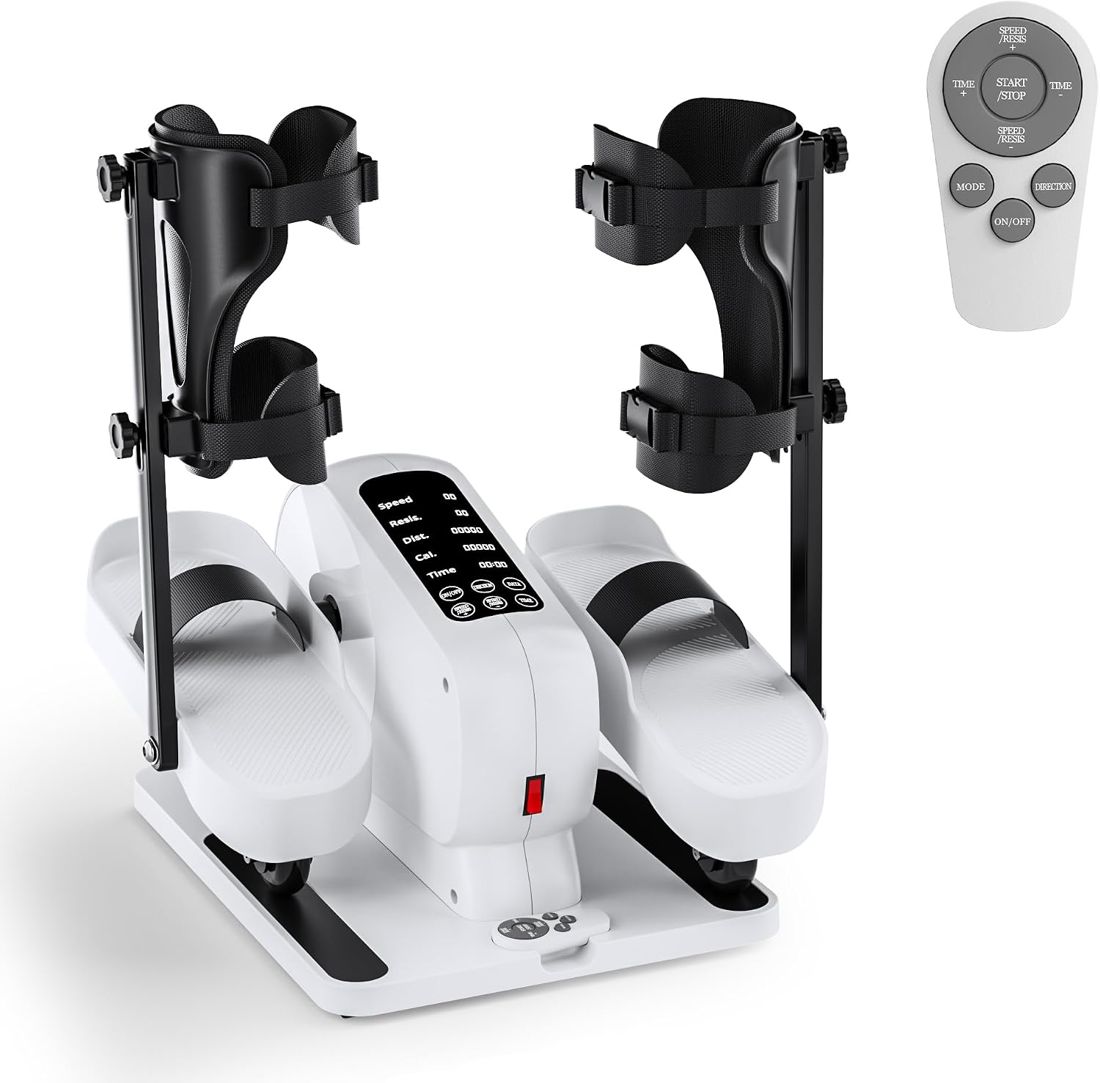
Electric Pedal Exerciser for Seniors
★★★★★★★★★★ 4.5 (141)$129.99 2 options
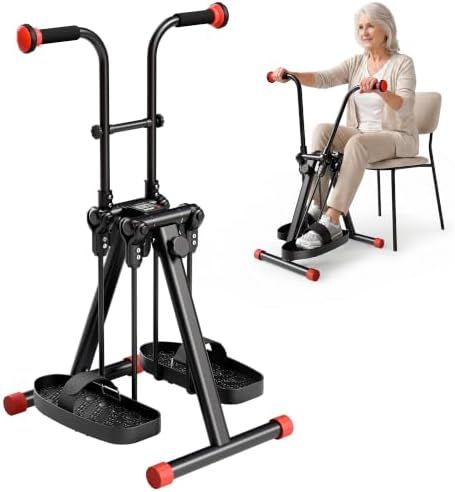
Full-Body Space Walker Pedal Exerciser
★★★★★★★★★★ 4.2 (10)$89.99 2 options