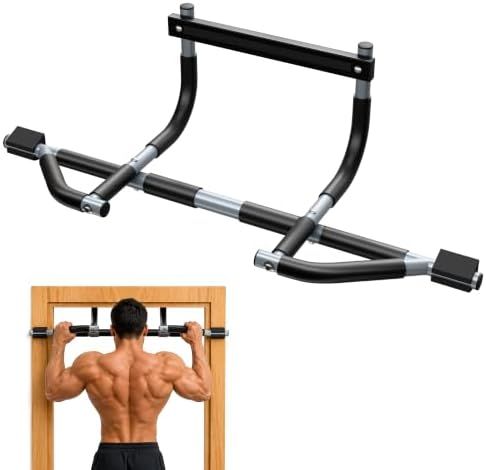
Multi-Grip Doorway Pull-Up Bar
★★★★★★★★★★ 5.0 (3)$39.99

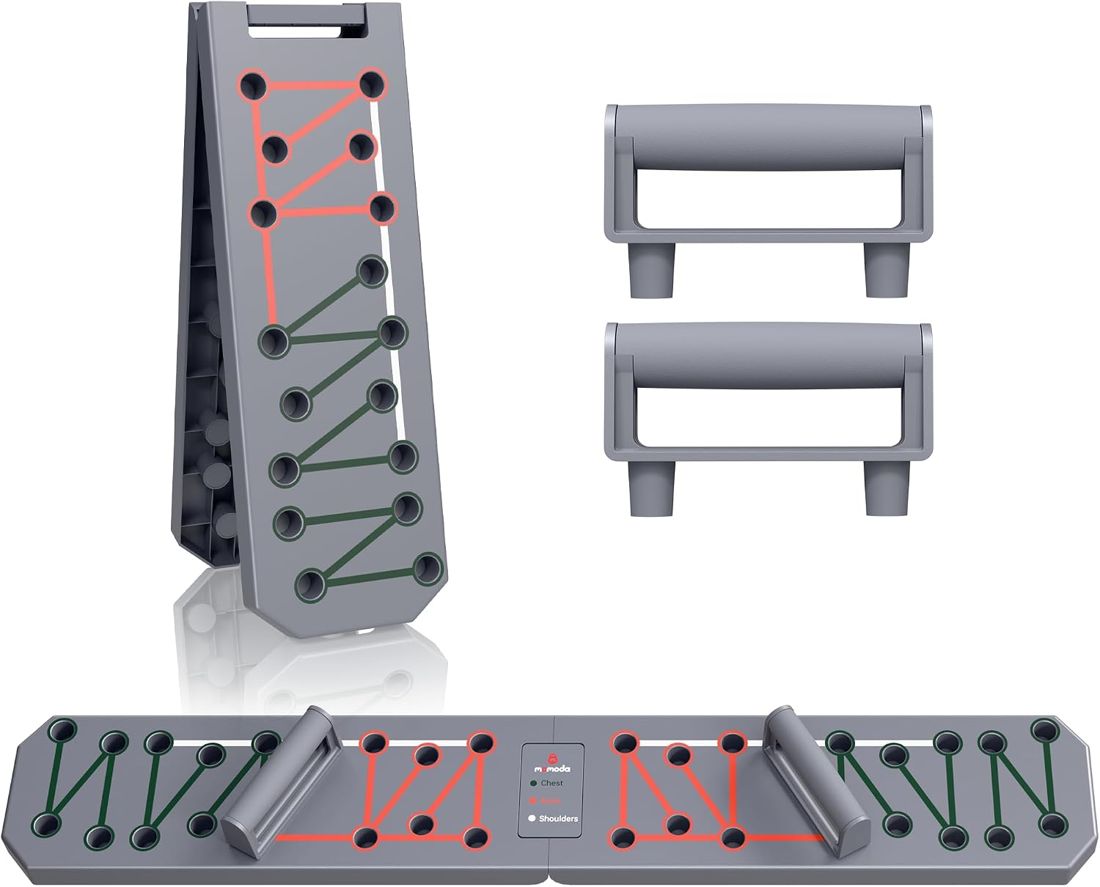
Our doorway pull-up bars hook over a standard door frame by leverage alone — no drilling, no screws, foam pads on the trim. Pick the grip count you want, measure your door frame width and depth, and the bar is up in a minute. The push-up board lives on the floor below it, so one doorway covers pull, push and core.
$39.99
$34.99
$24.89
$39.99
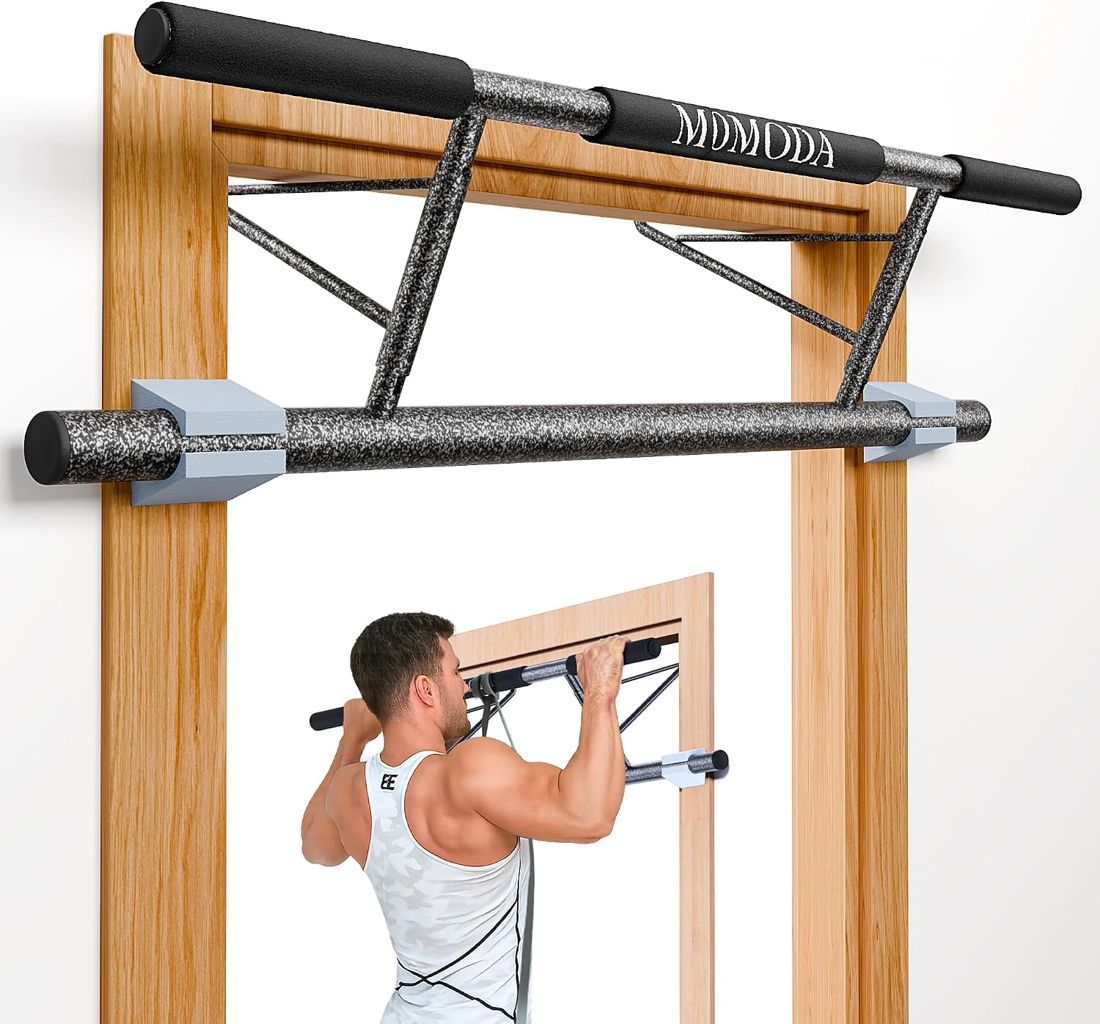
A doorway pull-up bar works on leverage. The long top bar rests on the trim above the door, the short lower bar presses against the inside of the frame, and your body weight pulls the two against the wood. Nothing is screwed in, which is why a bar fits a rented apartment as easily as a house. The thicker the foam pads on the contact points, the less mark the bar leaves on the door frame — we use thick EVA and high-density foam pads on every MOMODA bar for exactly that reason.
Three numbers decide the fit: the door width between the frame sides, the depth of the wall, and the height of the trim. Our multi-grip bar and the no-screw heavy-duty bar take most standard doorways; the no-screw bar lists 23.6 to 34.6 inches of width and up to 3.54 inches of trim. A bar that fits snugly does not wobble; a bar that has to be forced does not belong in that doorway.
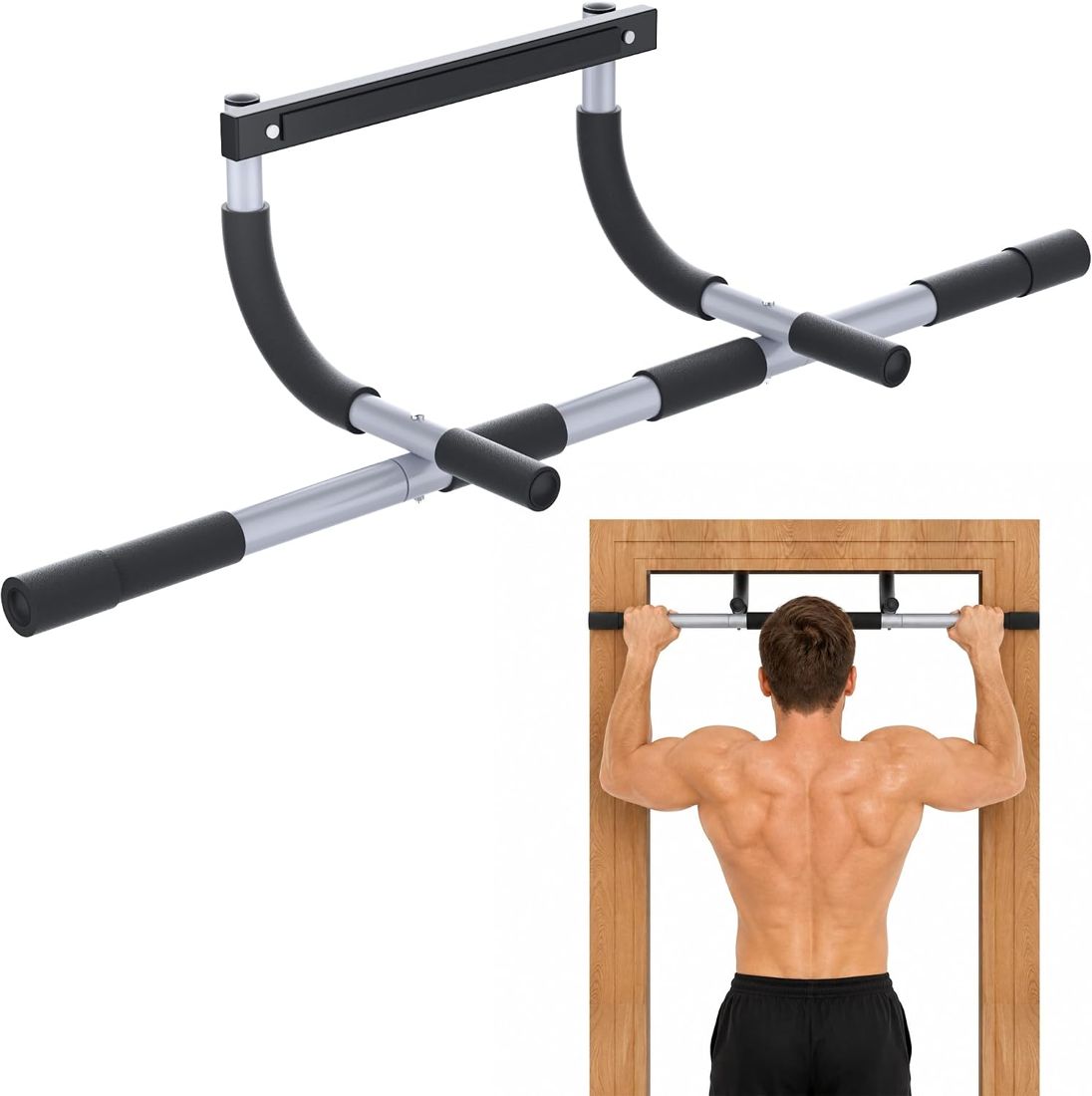
Wide grip pull-ups load the lats and the upper back, a narrow grip moves more work into the arms, and neutral grip (palms facing) is the easiest on the shoulders and elbows. Triangle grips and padded handles let you switch between them without leaving the bar. Hanging leg raises and knee raises turn the same pull-up bar into a core station, and the bar can sit on the floor for push-ups and dips.
Our multi-grip bar is rated at 550 lbs and the heavy-duty steel bars at 440 lbs. Those ratings assume a sound wooden door frame and a bar that sits square. Test it with a slow hang before the first set, avoid kipping and swinging, and take it down when it is not in use. Supervised kids and teens can train on it the same way adults do.
Some pull up bar designs need wall brackets or screw-in hooks. Ours are leverage bars: mounting takes a minute, the bar holds secure under load and comes off with one lift. That makes the same strength training equipment easy to move between rooms or take to a new apartment — and the adjustable-width designs support a range of door frame sizes.
Three exercises cover the whole body: pull-ups or chin-ups for the back and arms, hanging leg raises for the core, push-ups on the board for chest and shoulders. Start with three sets of what you can do with good form, rest a day between sessions, and add one rep a week. A pull-up bar is the simplest piece of strength equipment that keeps paying back.
Read next: How to Install a Doorway Pull-Up Bar Safely